
Cortisol and the Postpartum Environment
Quick answer
Cortisol is a hormone involved in the body’s stress response, and it plays an important role in both parent and newborn regulation during the postpartum period. Newborns have immature stress-response systems and rely on caregivers to help regulate cortisol levels through calm, responsive care. A supportive postpartum environment—one that protects sleep, reduces overstimulation, and prioritizes caregiver well-being—helps maintain balanced cortisol patterns for both baby and parent.
Chronic stress without support can disrupt this balance, which is why postpartum structure and support matter.
Key Takeaways
- Cortisol is a key hormone in the body’s stress response system.
- Newborns cannot regulate cortisol effectively on their own.
- Caregiver interaction directly influences infant stress regulation.
- Calm, responsive caregiving helps lower cortisol levels.
- Chronic stress can affect both parent and infant well-being.
- Sleep deprivation increases cortisol and impacts regulation.
- A structured, supportive environment helps maintain balance.
- Co-regulation is the foundation for healthy stress response development.
- Caregiver well-being directly impacts infant physiology.
- Postpartum support helps reduce chronic stress exposure.
Introduction
The postpartum period is often discussed in terms of sleep, feeding, and recovery.
But beneath all of these experiences is something less visible—and just as important: regulation.
At the center of this process is cortisol.
Cortisol is a hormone that helps the body respond to stress. In appropriate amounts, it is necessary and protective. But when stress becomes prolonged or unbuffered, cortisol levels can remain elevated, affecting both physical and emotional functioning.
For newborns, this matters even more.
Because newborns are not yet capable of regulating their own stress response.
They rely on the environment—and more specifically, their caregivers—to help stabilize it.
Understanding cortisol in the postpartum environment helps shift the focus from “managing behavior” to supporting regulation.
What Cortisol Does
Cortisol is part of the body’s hypothalamic-pituitary-adrenal (HPA) axis, which regulates the stress response.
According to the National Institutes of Health, cortisol helps the body:
- Respond to stress
- Regulate metabolism
- Maintain energy balance
- Support alertness
In short, cortisol is not a “bad” hormone.
It becomes a concern when stress is prolonged without recovery.
The Newborn Stress Response
Newborns are born with an immature stress-response system.
They can experience stress, but they cannot effectively regulate it on their own.
When a baby becomes overwhelmed—whether from hunger, fatigue, or overstimulation—the body activates a stress response and cortisol is released.
Without support, the baby cannot easily return to baseline.
This is why caregiver interaction is essential.
Co-Regulation and Cortisol
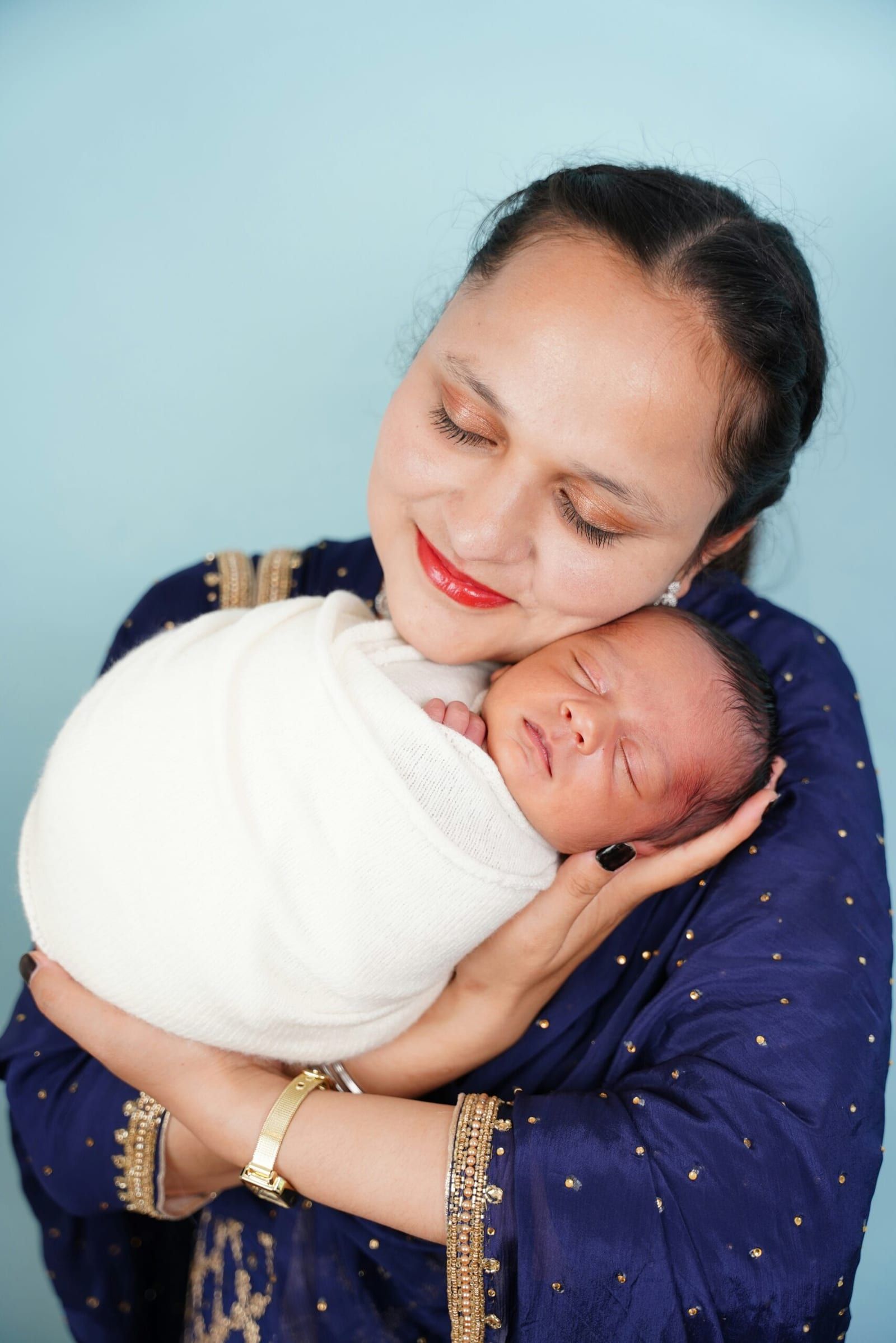
Co-regulation is the process through which a caregiver helps a baby return to a calm state.
This may include:
- Holding the baby
- Feeding
- Speaking in a calm voice
- Gentle movement
These interactions help lower cortisol levels and stabilize the baby’s nervous system.
Research on early caregiving environments shows that responsive, consistent care supports healthy stress-response development. The Center on the Developing Child at Harvard University explains that supportive relationships buffer stress and prevent prolonged activation of the stress response.
The Role of the Postpartum Environment
The environment surrounding a newborn plays a significant role in how stress is experienced and regulated.
A supportive postpartum environment often includes:
- Calm, predictable caregiving
- Reduced overstimulation
- Consistent routines
- Protected caregiver rest
When the environment is chaotic, overstimulating, or lacking support, stress may become more difficult to regulate.
This affects both the baby and the caregiver.
Caregiver Cortisol Matters Too
Parents are also experiencing significant physiological changes during the postpartum period.
Sleep deprivation, hormonal shifts, and emotional adjustment can all increase stress levels.
Elevated cortisol in caregivers can affect:
- Emotional regulation
- Patience
- Decision-making
- Ability to respond calmly
Because babies are sensitive to caregiver tone, touch, and responsiveness, caregiver regulation directly influences infant regulation.
Sleep and Cortisol
Sleep plays a critical role in regulating cortisol levels.
The CDC highlights the importance of adequate sleep for maintaining hormonal balance, including stress hormones.
In the newborn stage, sleep is often fragmented.
Without support, this can lead to:
- Increased stress levels
- Reduced resilience
- Greater emotional reactivity
Protecting sleep—even in small amounts—helps support regulation for both parent and baby.
Chronic Stress vs. Short-Term Stress
Short periods of stress are normal and expected.
A baby cries, the caregiver responds, and the baby settles.
This pattern is healthy.
The concern arises when stress becomes chronic and unbuffered.
The Harvard Center on the Developing Child describes this as “toxic stress,” where the stress response is activated without adequate support.
In early infancy, consistent caregiving acts as the buffer that prevents stress from becoming harmful.
Reducing Stress in the Postpartum Period
While stress cannot be eliminated, it can be managed.
Supportive strategies may include:
- Sharing caregiving responsibilities
- Limiting overstimulation
- Creating predictable routines
- Seeking professional newborn support
- Setting realistic expectations
These strategies help reduce the overall stress load on the household.
The Role of Postpartum Support
Postpartum support plays a direct role in reducing chronic stress.
This may include:
- Overnight care to protect sleep
- Guidance on feeding and soothing
- Assistance with newborn routines
- Emotional support for caregivers
By reducing both physical and mental strain, support helps regulate the environment.
This, in turn, supports cortisol balance.
The Bigger Picture
Cortisol is part of how the body responds to the world.
In the newborn stage, that response is shaped by relationships and environment.
Babies rely on caregivers to help them move from stress back to calm.
Caregivers rely on support to maintain their own regulation.
When the postpartum environment is structured, supported, and responsive, cortisol remains part of a healthy system rather than a chronic burden.
And in that balance, both baby and parent are better able to adapt, connect, and grow.
About The Newborn Care Solutions Agency
The Newborn Care Solutions Agency is the only newborn care placement agency founded by an internationally accredited training provider. Based in Scottsdale, Arizona, the agency serves families nationwide by connecting them with rigorously vetted, professionally trained Newborn Care Specialists.
All content is grounded in established neurodevelopmental research, pediatric guidance, and postpartum care best practices.
For more information, visit thencsa.com or call (602) 695-6775.

Written by Tonya SakowiczFounder, The NCS Agency